Fixed Wireless Access (FWA)
Background
The Oneida Nation is implementing a major broadband initiative to bring fiber-to-the-home (FTTH) technology to homes across the reservation. This project, made possible through a $6.6 million grant from the Department of Commerce’s National Telecommunications and Information Administration (NTIA) under the Tribal Broadband Connectivity Program, will deliver high-speed internet access to up to 669 homes in the community.
In partnership with Nsight, a leading provider of telecommunications and technology solutions, this effort is designed to strengthen connectivity for essential services such as education, telehealth, and economic development—ultimately improving quality of life for Oneida families. The project will focus on homes located in the southwest, southeast, and northeast areas of the reservation.
This initiative reflects the Oneida Nation’s commitment to closing the digital divide and ensuring reliable, secure communication services for all community members. Digital Technology Services (DTS) is leading the project, working closely with Nsight to deliver cutting-edge broadband solutions that meet the unique needs of the Oneida community.
Key details to know:
- The grant covers the initial installation of fiber infrastructure for eligible homes.
- High-speed internet service will not be free; ongoing costs such as maintenance, equipment, and customer support will apply.
- Not every home will be included. Addresses already served by providers like Spectrum, Bright Speed, TDS Fiber, and Bug Tussel are unlikely to qualify.
To check coverage for your address, visit the FCC Broadband Map.
Oneida FWA Project
The Oneida Nation has successfully built two new towers within the reservation boundaries to broadcast high-speed internet:
- One tower is located on the old Health Center property across from E&EE One Stop.
- The second tower stands on Cooper Road.
These towers use Fixed Wireless Access (FWA) 2.5G technology, delivering fast and reliable internet to areas where traditional wired connections aren’t available. This achievement helps ensure more homes and businesses can stay connected.
What This Means for Our Community
- Closing the Digital Gap: Residents now have better access to online resources like education, healthcare, and job opportunities.
- Affordable Options: Wireless technology makes service more cost-effective compared to fiber or cable.
- Reliable Connectivity: Perfect for remote work, online learning, telehealth, and staying connected with family and friends.
- Room to Grow: The network can be upgraded as community needs increase.
- Supporting Local Business: Reliable internet attracts new businesses and helps local entrepreneurs thrive.
- Improved Quality of Life: From streaming and shopping to accessing government services, internet access makes everyday life easier.
- Emergency Support: FWA provides critical communication during emergencies and real-time updates.
This milestone is part of our ongoing commitment to connect every corner of the reservation and give our community the tools to succeed in today’s digital world.
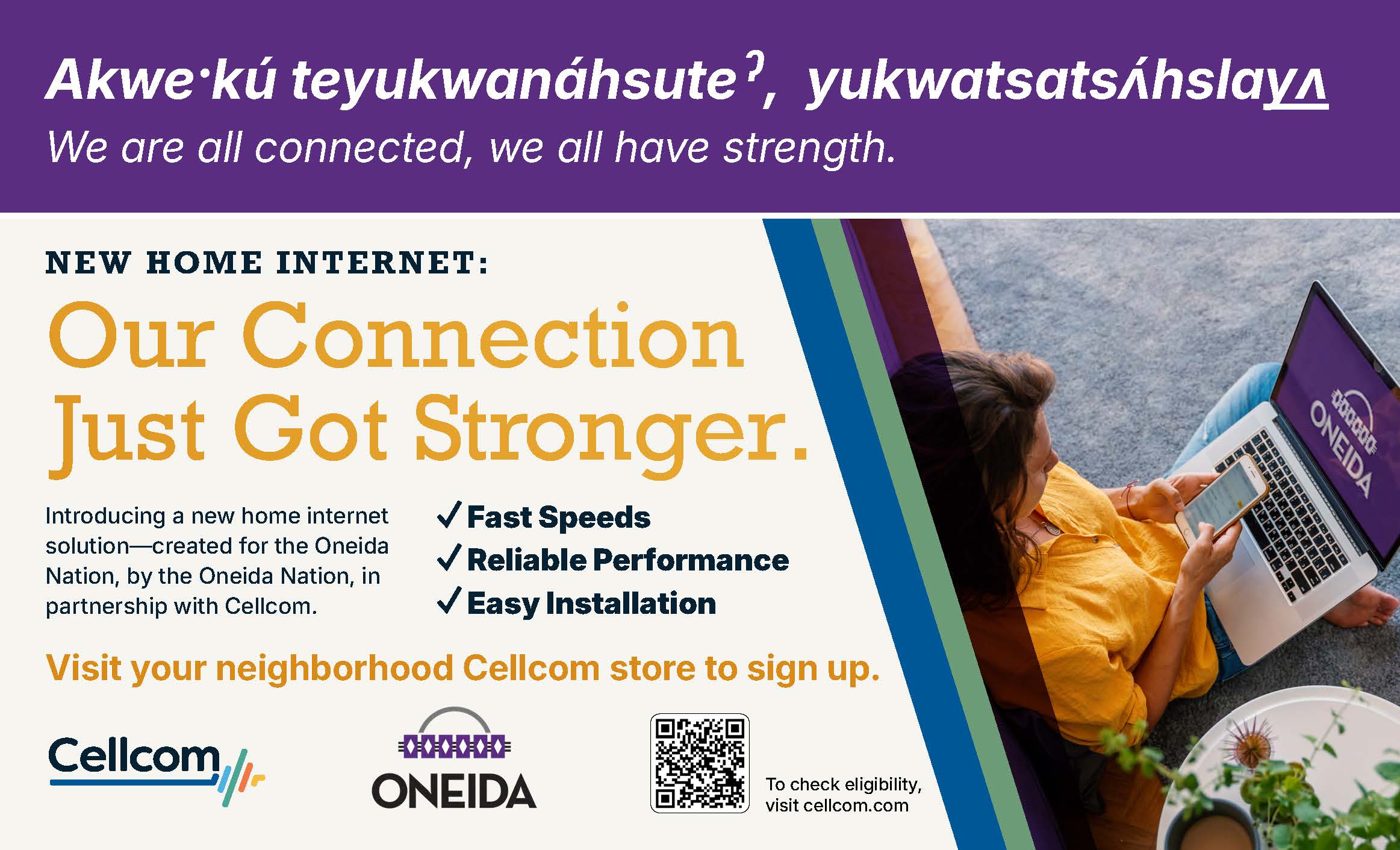
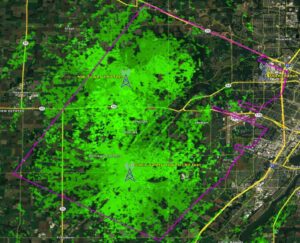
Below is a map of the anticipated coverage for the 2.5G Fixed Wireless Access
What is Fixed Wireless Internet (FWA)?
Fixed Wireless Access (FWA) is a way of providing wireless connectivity through radio links between two fixed points. In other words, fixed wireless is a way to provide wireless internet access to homes or businesses without laying fiber and cables to provide last mile connectivity. FWA enables network operators to provide ultra-high-speed broadband to sub-urban and rural areas where the cost of laying fiber or maintaining fiber lines is prohibitively expensive.
There are both benefits and limitations to fixed wireless access, which include:
Benefits:
- Bridging the digital gap in underserved areas: In a time when the internet is becoming increasingly essential, FWA offers a way to bring high-speed connectivity to those who need it most.
- Can provide high-speed internet to areas without infrastructure: FWA does not require a physical wired connection outside the home, making it an option for those who reside in areas with mobile coverage.
- Flexible installation: Unlike other technologies, FWA can be installed quickly and easily without needing trenches or other disruptive construction. For example, the first 5G customer in Houston and in the nation simply had a small, pillow-shaped antenna installed on their home, from which a wire runs down to their router. The antenna itself receives a wireless signal from one of Verizon’s many fixed wireless nodes located on power and light poles in Houston.
Limitations:
- Transmission distance is limited: Because FWA connections rely on line of sight, they are limited to areas close to the cellular tower.
- Environmental factors can impact performance: Some FWA connections may be impacted by things like trees, buildings, and path loss, which depends on the terrain.
- Relatively new technology that is continually evolving: As with any new technology, some kinks still need to be worked out, such as occasional outages, dropped connections, and so on.
Resources: Nokia
Lifeline Survey
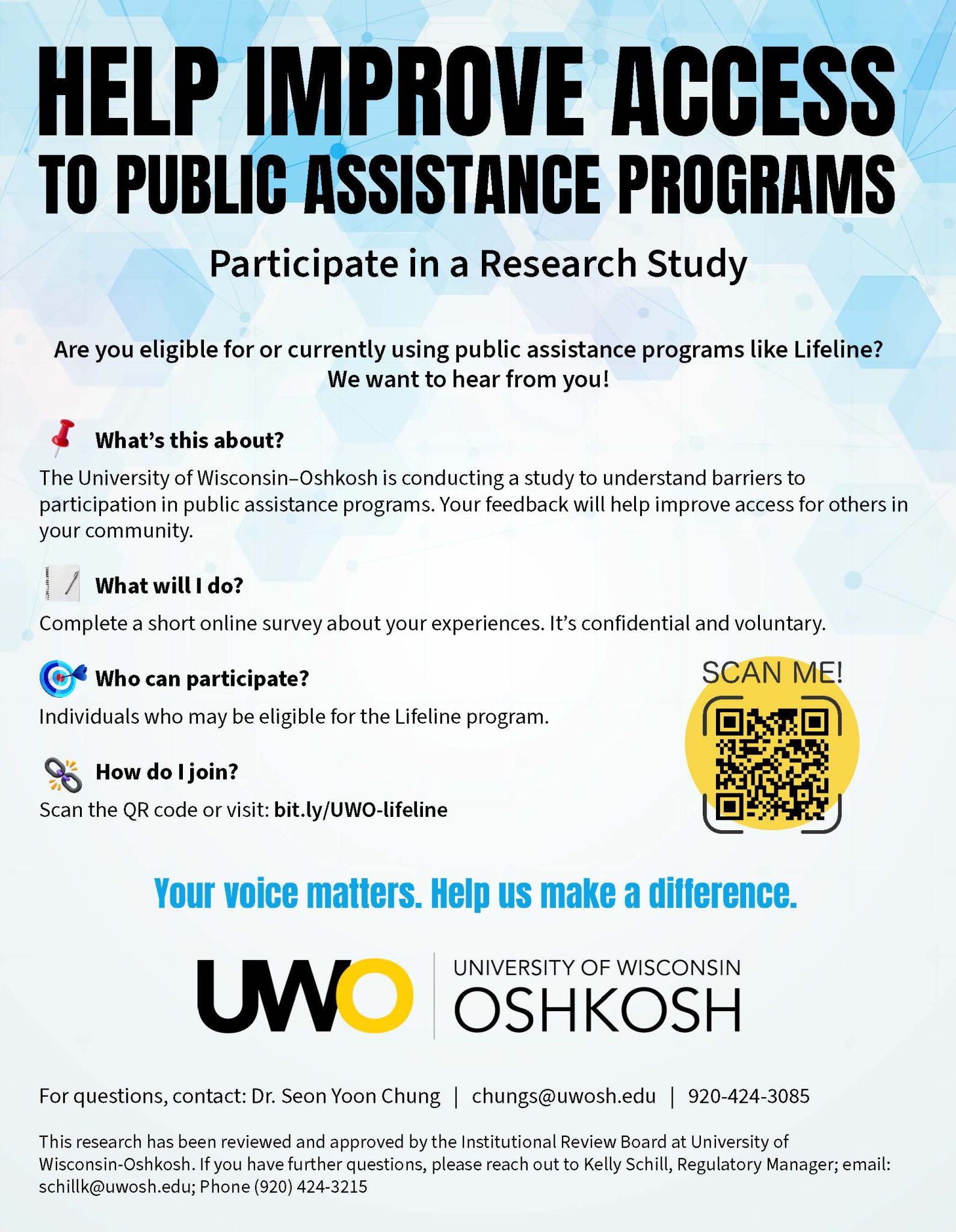
For more information from University of Wisconsin-Oshkosh, click here
This link covers basic Lifeline and Tribal Lifeline details: Lifeline Support for Affordable Communications | Federal Communications Commission
Wisconsin Lifeline Fact Sheet
What is Lifeline?
The Lifeline program provides low-income Wisconsin residents affordable access to essential telecommunications by discounting the cost of phone, cell, and internet services.
How much money can I save with Lifeline?
For Tribal Lifeline, consumers living on Tribal lands can receive up to $34.25/mo off phone or internet service. Consumers that do NOT live on Tribal lands can receive up to $9.25/mo off phone or internet service.
Who is eligible?
You are eligible if you participate in one of the following qualifying programs:
- Medicaid
- FoodShare
- Federal public housing assistance (Section 8)
- Veterans and Survivors Pension Benefit
- Supplemental Security Income (SSI)
Or, if your income is at or below 135% of the federal poverty guidelines. Only one person per household may receive a Lifeline discount.
How can I find out if I am eligible?
You can check your eligibility online using the National Verifier at checklifeline.org or with a paper form which can be downloaded and mailed in.
The National Verifier is connected to federal databases and can determine if you are enrolled in a qualifying program listed above. If you do not participate in a qualifying program, you must provide proof that you meet the income guidelines. Your provider can help you with this, or you can contact one of the numbers listed below.
There are new rules for people who are income-eligible because of recent unemployment due to the pandemic. Applicants may submit:
- A notice of unemployment benefits payment, or
- A notice of a successfully submitted application for unemployment benefits.
These documents must be dated in the last three months.
How can I enroll?
You must contact an eligible telecommunications carrier (ETC) to enroll. You can find a list of ETCs at psc.wi.gov on the Lifeline Program webpage under the Programs tab. You can determine your eligibility before you contact the ETC, or ask them to help you find out if you are eligible.
How can I get help?
Wisconsin Internet & Phone Helpline: (608) 267-3595
Open Monday through Friday, from 7:45 a.m. to 4:30 p.m.
Request an interpreter if you need assistance in a different language.
Federal (USAC) Lifeline Support number: (800) 234-9473
Open Monday through Friday, from 10 a.m. to 10 p.m.
Email lifelinesupport@usac.org.
Sign-up Information
In person sign up: Cellcom Store location: 1620 W. Mason St (By Planet Fitness)
The new service offers speeds of up to 100 Mbps download and 10 Mbps upload, providing essential internet access for households and individuals who have no other options. This solution is ideal for light users—those who rely on the internet for basic tasks such as browsing, email, and streaming on a limited scale. While not intended for heavy gaming, large families with multiple simultaneous streams, or extensive telecommuting, the service ensures that everyone in the community has a pathway to digital inclusion.
The investment in three strategically placed towers will evolve alongside community needs. In the near future, the service will be upgraded to 5G technology, delivering speeds of approximately 350 Mbps download and 35 Mbps upload. This enhancement will provide a more robust experience for users and expand the possibilities for connectivity.
Beyond internet access, the towers also serve as public safety radio towers, reinforcing the Nation’s commitment to community safety. Even as Fiber-to-the-Home (FTTH) is rolled out in the next 2–3 years, the towers will remain a vital asset, supporting SMART Nation applications and other wireless use cases.